
A cover letter has one job: to make a hiring manager want to read your resume and call you in. It's not a summary of your CV in paragraph form — it's the case for why you, specifically, fit this role. Get the basics right and you're already ahead of most applicants. Here's how to write one that gets noticed, with examples. If you'd rather start from a draft, our free cover letter generator builds one you can edit.
Start by understanding the company
Before you write a word, learn what the company actually cares about. Read the job description closely, look at how they describe themselves, and note anything recent. The point is to tailor the letter so it answers what they're looking for rather than describing you in a vacuum.
| Look at | Why it matters |
|---|---|
| What the role asks for | So you can address it directly |
| How they describe themselves | So your tone matches theirs |
| Recent news or projects | So you can show genuine interest |
Personalise the greeting
Drop "Dear Sir/Madam" and use the hiring manager's name. It takes five minutes on LinkedIn or the company site, and it signals you've done your homework. Match your tone to theirs too — formal where they're formal, a little warmer where they're not.
Highlight the skills that matter
Your cover letter is the partner to your resume: it shows how your experience lines up with this job. Don't send a generic letter — tailor it, and back your claims with real examples rather than adjectives. Be confident without overselling; a true account beats a inflated one. If you're early in your career, our guide to writing a cover letter with no experience covers how to lead with what you do have.
| Skill | Example that proves it |
|---|---|
| Digital marketing | Grew website traffic 30% in six months with targeted campaigns |
| Team collaboration | Led a team of five through a successful product launch |
| Project management | Ran several projects at once without missing a deadline |
How to structure a cover letter
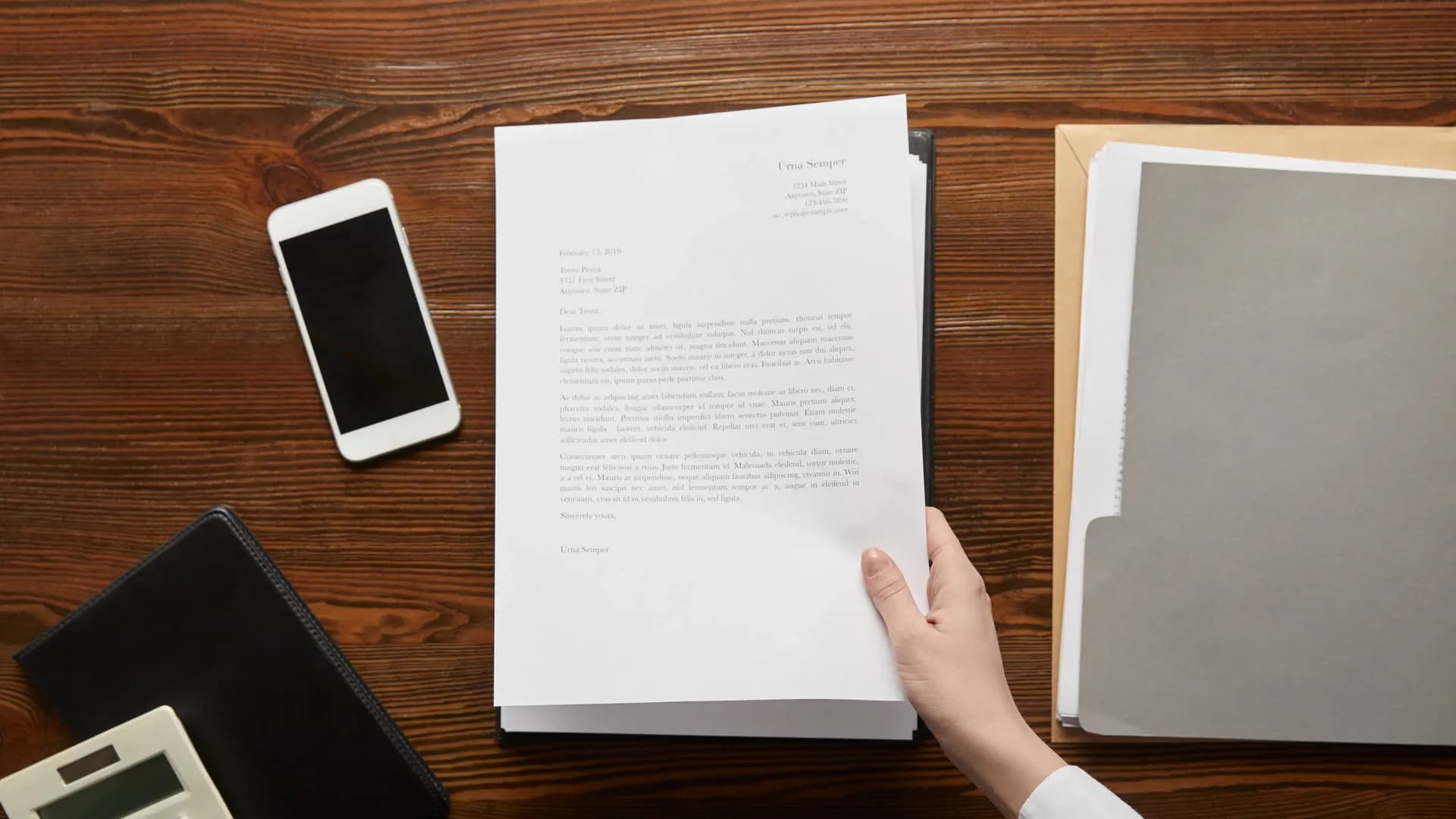
A cover letter isn't complicated, but it needs a clear shape. Three parts do the work: an opening, the evidence, and a close.
The opening
State the role you're applying for and why it interests you, in the first two sentences. Don't bury it.
"I'm applying for the Marketing Coordinator role at XYZ Company, which I saw on your careers page. I have a background in digital marketing and I'm drawn to the way your team approaches campaigns."
The evidence
This is the body. Show the experience and skills that match the role, and frame them around what the employer gets — not just what you've done. A short, specific example beats a list of qualities.
The close
Restate your interest and invite the next step. Keep it brief and direct.
"Thank you for considering my application. I'd welcome the chance to talk about how I can help XYZ Company hit its goals, and I'm available whenever suits you."
For more layouts to follow, see our cover letter structure examples, and the business letter format for spacing and alignment.

Tailor it to each job
Sending the same letter everywhere is the fastest way to sound generic. Match each letter to the specific role: pull out what the job asks for and line up your experience against it. Even the greeting can flex depending on what you can find out.
| Greeting | When to use it |
|---|---|
| Dear [Hiring manager's name] | Best option — you found the name |
| Dear Hiring Team at [Company] | You know the team but not the individual |
| Dear [Department] Team | You only know the department |
Make it about the employer
The strongest cover letters are written from the employer's side of the desk. Instead of "I'm a great team player," write "I contribute to team dynamics in a way that lifts collaboration and gets projects shipped." Same point, but framed around what they gain.
Back it with facts. "I improved sales" is forgettable; "I increased sales 20% in six months with a new customer-management system" is not. Numbers make your claims credible.
| Skill | Example | Impact |
|---|---|---|
| Project management | Led a product launch | Shipped ahead of schedule |
| Sales | Introduced a new CRM process | Revenue up 20% |
| Customer service | Reworked the complaints process | Satisfaction up 15% |
Do that consistently and you stop sounding like a job-seeker and start sounding like someone who'll make their team better. Still staring at a blank page? Our free cover letter generator gives you a tailored draft to work from.